This will help to make certain that they have https://www.xcritical.in/ the experience and assets to supply reliable liquidity. Second, you should search for a provider that provides competitive pricing and tight bid-ask spreads. Finally, you want to look for a provider that’s clear about their pricing and operations. Core Liquidity Providers have a broader focus and supply liquidity to multiple belongings and trading venues. LPs offer a extra passive type of participation by funding liquidity pools, permitting for automated market-making by way of good contracts.
- Market Makers, on the opposite hand, use a spread of buying and selling methods, including arbitrage, hedging, and scalping.
- Regarding the various kinds of market makers, it is essential to note that trade individuals fall underneath the class of speculative market makers.
- One of the most important trading situations that traders contemplate when selecting a dealer or trading platform is the spread.
- Additionally, exchanges may implement measures to encourage more liquidity providers, corresponding to lowering minimal quantity requirements or bettering connectivity options.
- Both these systemically important participants of market relations carry out the same task within the broad sense of their performance.
Tier 1 And Tier 2 Liquidity Providers
They not only facilitate increased trading volumes and market participation but also ensure market stability and reduce trading prices. Their efforts contribute to extra accessible, stable, and fruitful buying and selling for all merchants Know your customer (KYC) and buyers. MMs take a more active position by dynamically managing their orders to answer market demands, thus immediately influencing market costs and spreads. Their activities are essential for tight bid-ask spreads and the quick execution of trades, particularly in extremely volatile markets.
The Function Of Liquidity Providers In Guaranteeing Market Liquidity
Market Makers act as intermediaries between buyers and sellers, and their position market maker vs liquidity provider is to ensure that there is always a purchaser or vendor for a security. If you’re a high-frequency dealer who needs to execute trades rapidly and efficiently, then a Market Maker could additionally be a greater choice. Market Makers provide quicker execution occasions and tighter bid-ask spreads, which could be helpful for high-frequency buying and selling. However, in case you are a longer-term dealer who values liquidity and market depth, then a Core Liquidity Provider could also be a better possibility. CLPs provide a wider range of securities and extra stable liquidity, which could be useful for longer-term buying and selling strategies. Ultimately, the greatest option will depend on your specific wants and preferences.

Peer-to-peer Foreign Money: Simplify Financial Transfers In International Markets
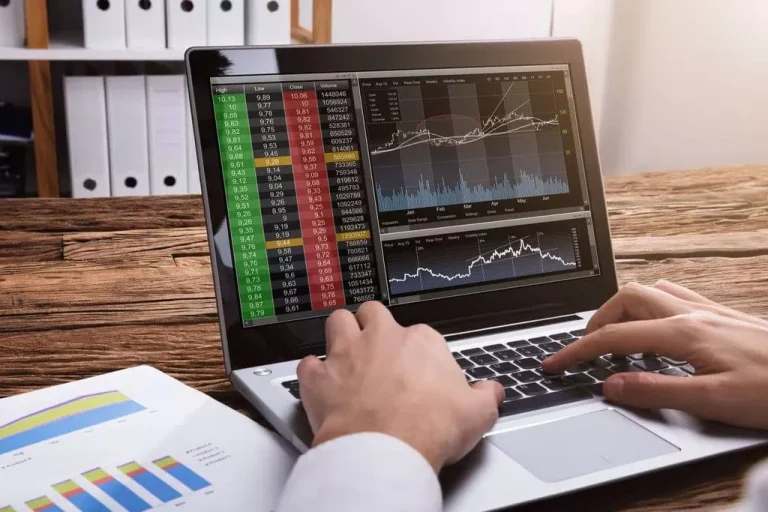
They additionally help to stabilize prices and improve market depth, enabling smoother execution of trades. Market makers play a crucial function within the monetary market as they supply liquidity and facilitate trading activity. Market makers are usually giant monetary establishments that buy and promote securities to ensure that there’s at all times a purchaser or seller obtainable in the market. They make money by incomes the unfold between the buy and sell prices of the securities they trade. In this part, we are going to explore the role of market makers and how they differ from core liquidity providers. Market makers play a vital role in the monetary markets by providing liquidity, setting prices, minimizing spreads, and managing threat.
Market Liquidity And Competition Amongst Designated Market Makers
They work underneath the B-book mannequin, taking the other facet of their customer’s trades and do not move the orders to liquidity suppliers. Artificial intelligence is today’s market making, facilitating a clean flow of concluded deals and offering instant liquidity through mathematical algorithms. There has definitely been a breakthrough within the buying and selling world with automated applications that can process as a lot as one million orders simultaneously. These techniques have expanded the probabilities for trading methods and have enabled the development of latest applied sciences to increase the liquidity of the market.
These prices can have a big impact on the general profitability of a trade, and they include varied charges and expenses such as commissions, spreads, and slippage. In the world of foreign currency trading, understanding the differences between a liquidity supplier and a market maker is essential for traders. Both play pivotal roles in making certain market efficiency and liquidity, but their operations and impacts on trading can range significantly. This article will delve into the roles, benefits, and challenges of liquidity providers and market makers, offering a complete comparability. Core liquidity suppliers (CLPs) are institutional investors which are appointed by exchanges to provide liquidity to particular securities or markets. They are typically banks, broker-dealers, or other monetary establishments with important trading capabilities.
They also use high-frequency buying and selling to execute trades quickly and efficiently. Market Makers, however, use a spread of buying and selling strategies, including arbitrage, hedging, and scalping. As a liquidity supplier, your major goal is to ensure liquidity available within the market by offering competitive bid and ask prices. By doing so, you assist maintain a clean circulate of trades and reduce the bid-ask spread. They create a market for securities and profit from the difference between the bid and ask prices—the unfold.
The 21st-century digital revolution has allowed small and mid-sized companies to compete with established and capital-intensive trade giants. Today, even the smallest firms can theoretically become brokers, provide banking services, create e-commerce retailers and much more. Previously, none of those actions were even accessible to companies with limited budgets.
Market indicators are best defined as quantitative instruments used by investors or merchants to supply an approximation of what is in retailer for future market motion. As you step into this world of economic intricacies, you’ll uncover the nuances that set them apart and discover the crucial function they play in shaping the dynamics of the market. Market Makers handle danger mainly by hedging and controlling their stock of securities.

Core Liquidity Providers use diversified danger management methods – hedging and portfolio diversification – to mitigate market dangers. Tier 1 and Tier 2 groups are two categories into which market makers can be categorized. MMs are additionally identified to function in multiple industries, aggregating their resources to provide a cross-industry synergy and consistency across markets. For example, the latest surge of market making in crypto has motivated large banks to invest in this sector, producing barely more consistent pricing between forex and crypto industries.
They are additionally required to supply continuous quotes and execute trades at the quoted costs. Market Makers, however, are obligated to maintain a sure level of liquidity in the market and guarantee that there is all the time a buyer or seller for a security. They are also required to offer price quotes and execute trades at their quoted costs. CLPs are institutional traders who provide liquidity to the market by offering to purchase and promote financial instruments at the quoted prices. They operate in a aggressive environment and aim to offer the most effective costs to their purchasers. On the opposite hand, Market Makers are firms that present liquidity by offering to purchase and promote securities at their very own quoted prices.
On the other hand, with insufficient demand, the market maker would buy the asset. They make sure traders at all times have a counterpart for their deal by continually altering their acknowledged charges and stock relying on market dynamics. Forex is a platform where everybody, from a huge company to a beginner trader, can start making a profit from their funds. While they act as market makers, the primary distinction is that market makers have roots in traditional finance.
By offering competitive bid and ask prices, liquidity suppliers help maintain market stability and effectivity. Advancements in market-making have a significant impression on the whole monetary trade. The monetary system has slowly advanced towards an increasingly automated process over the past two decades. A key factor of that transition is the substitute of traditional market makers with pc programs that make selections in fractions of a second using sophisticated algorithms.
Liquidity suppliers play a important position in sustaining market liquidity by providing buying or promoting alternatives to different traders. By actively quoting bid and ask costs, market makers play a pivotal role in facilitating buying and selling actions in financial markets. Market makers present liquidity by continuously shopping for and selling securities, guaranteeing that there’s at all times a prepared market for traders to trade. This fixed availability of costs and the power to execute trades shortly is a big advantage of market makers. By providing liquidity, market makers and liquidity suppliers contribute to efficient value discovery and cut back bid-ask spreads, enhancing market effectivity.
They are required to stick to specific rules and rules, such as the one outlined by the Securities Exchange Commission (SEC) in the United States. Similarly, within the Forex, stock or crypto markets, liquidity is an important issue that displays an investor’s capability to purchase or promote currencies and different assets shortly. High liquidity ensures well timed execution of orders, while low liquidity could result in order execution delays, resulting in surprising losses. In this text, we’ll delve into the concept of a liquidity provider vs. market maker, their capabilities, and the way they impact traders’ experiences and the market as an entire. Because transactions happen frequently on decentralized exchanges, liquidity is important.


